Showing posts with label sweeteners. Show all posts

Thursday, March 5, 2015

What The Fork Are You Eating? Giveaway


I don’t really respect that many people. In terms of nutrition, I could rattle of a dozen RDs whose work I applaud but I am picky.  love nothing more than people who are smarter than I am, know more and when they pair that with passion? They’ve got me. Enter Stefanie Sacks culinary nutritionist, radio show host (she hosted me with Little Book of Thin) and now author. I asked Stefanie a few questions and we’re giving away 2 copies of her fantastic, new book Whatthe Fork Are You Eating?IF you think you know a lot about food, I promise you this book will tell you more.

How did this book come about? Who would you say it’s for?
What The Fork embodies roughly 30 years of my learning: first as a kid trying to get well, then as a culinary student, nutrition student and ultimately a culinary nutrition professional and impassioned food warrior. What The Fork is meant for the food and nutrition neophytes as well as the mavens. There is something in it for everyone (hopefully). Even I have so much more to learn!!!

I love your “top-rated” terminators and you do a great job explaining the history and peril with many ingredients currently used. It’s not just “don’t eat this” but you provide the reason why. What would be the ingredients you feel people should cut out above all others?
 Food dyes are likely my number one ingredient to eliminate. There is extensive research linking them to carcinogenicity, neurotoxicity and genotoxicity (see Rainbow of Risks report by Center for Science in the Public Interest). Red Dye #40 in particular has been directly linked to hyperactivity in already hyperactive children. U.S. consumption of food dye has increased five-fold since 1955 and today children and adults consume products with not just one dye in them, but multiple dyes. And it is important to note that when studies were conducted years ago, they only addressed single use dyes (meaning one dye at a time) and their effects were not studied on children. Food can effectively be colored with healthier alternatives like turmeric or beet powder so I highly suggest opting out of the petroleum-based artificial colors. 

The whole Europe/US contrast in ingredient safety drives me nuts. Why are so many more ingredients banned in Europe? How can companies justify dye free or superior products produced there versus here?
 I am honestly blown away by this reality. The European Food Safety Authority was established in 2002 in response to a series of food crises in the late 1990’s. Their job? To assess risk relating to food and feed safety. They enlist a “precautionary principle” which essentially means that when there is substantial and credible evidence pointing to dangers to human or environmental health then protective action should be taken even though there may still be some measure of scientific uncertainty. Bottom line, the EU (European Union and its keystone European Food Safety Authority) care more about human and environmental health than the U.S. Government who, in my opinion, are playing roulette with true food safety (and health) daily because of their insidious relationship with Big Food and Big Ag. Food companies in the US use inferior ingredients because they can and because their bottom line is ultimately their priority.

Your pantry section is great. If someone is getting their food shopping act together what are the top 5 ingredient swaps that you would suggest?"
  • If cereal is a must, go for the truly whole grain sort in rolled or steel cut oats (made with water and topped with a little maple syrup or honey, fresh fruit and nuts), even muesli (no sugar added version)
  • Opt out of the corn, soy and canola oils (likely genetically modified) and opt into extra virgin olive oil (even grape seed oil) and coconut oil
  • Dabble in sugar with honey, maple syrup or even raw cane sugar versus any of the artificials
  • Instead of using too much salt to season food, become a mixologist with fresh or dried herbs and spices. Also have San-J low sodium tamari on hand (less sodium per serving than salt) to lift food flavor
  • Instead of the pasta all of the time, try spaghetti squash as an alternative or simply spiralize a zucchini 

Your recipes look great; at my house we have a high degree of repetition with our recipes (makes it easy). What recipes from book do you make most often?
My go to recipes are the my Power Green “Fuice” and Untraditional Egg Salad (basically eggs and mashed avocado) for breakfast. Skillet Broccoli, Lazy Lentil Soup, Red Quinoa Tabouli, Cowgirl Chili and Mon Freres Meatballs are other favorites. 

Thanks Stef,  you can catch Stefanie this Saturday March 7th at TEDx Manhattan—Changing The Way We Eat. Her talk—What The Fork Are You Eating? Small Changes in Food Choice Can Make BIG Everyday Differences. To stay connected with Stefanie, sign up for her blog -- bi-weekly ruminations, radio shows and recipes, and follow her on: FacebookTwitter, and Instagram. Her book,What the Fork Are You Eating? (Tarcher/Penguin Random House) is available wherever books are sold.

Are food dyes on your radar? Which ingredients puzzle you most?
Any great, new food books other than this one you’re reading?
To be eligible for this giveaway
Comment below
And tweet “@Foodtrainers  is giving away 2 copies of the best new food book @stefanie_sacks #healthy #food #books #nutrition

Thursday, December 12, 2013

Can you "cheat clean"?


I love reader questions.  This was a question that accompanied the photo above.
Lauren- this just appeared in my news feed.  When it sounds too good to be true, it usually is.  Can you "cheat clean?"

Where to start... yes, it might be possible to “cheat clean” if this refers to having some delicious and seemingly indulgent food without it leaving messy traces on your body. These traces could be temporary and take the form of bloat or perhaps they linger on our thighs or around the middle. Hu Kitchen’s amazing dark chocolate almond butter bar, Nibmor spiced hot chocolate and Bare Burger come to mind if I were to think of “clean cheats” but I don’t like this terminology at all.

In life or in food cheating and getting away with it doesn’t sound right. I may be a bitch but I’m not a cheat. Fibbing, lying or “fudging” aren’t in my repertoire. I much prefer the word treat to cheat. And of course there are foods and drinks that are treat-worthy. In The Little Book of Thin I explain Treat Training. Cheating leads to guilt, with treats the guilt is gone because you plan for these foods. You’re busy, I’m busy food and diet guilt is a waste of your time.

 And now for the ad in question. Is this cheating cleaning (there has to be a way to insert a drumroll sound)? You can look for yourself  but I spy sucralose (aka splenda) in these snack bars. If nuts, fruits and vegetables are “clean” foods, in this weird cleanliness analogy, splenda and all its fake sugar pals are dirty. This company may feel “low carb” and “gluten free” make it clean but I’m deeper than that. You’re not clean if you’re artificial deep down, not in my book.

We have a twitter chat tonight at 8pm #wellnesschat where I’ll discuss how to have your (holiday) cake and wellness too. Come join.
What do you think of “cheat clean”? Have you tried these bars? Do you like bars? And worthy treats, what are your favorites this time of year?
And in case you thought the cheating ad was bad, this is definitely worse. 

And no reader, it wasn’t your PMS that made you think so. "Surprise him with a new body" a topic for another rant or just gross.


Monday, April 8, 2013

You Should Drink Coffee and The Best Coffee to Drink

Bulletproof coffee photo via weightlossguru.com, keep forgetting to take my own
Saturday,  while getting a haircut, I flipped through a magazine. I wouldn’t suggest this diversion as a lot of cutting occurred as I read probably because I was annoyed with a certain article. Asked for her opinion of the Paleo diet an expert quoted offered “it’s never good to remove a whole category of food” a sentiment already filed in my collection of worthless diet advice. I’m not against category slashing. If there’s a reason to give up gluten or dairy or sugar that leaves you feeling better with improved digestion or more energy, breakups are fine. If you tell me you’re swearing off soda or icky sweeteners, cold cereal and “faux” whole wheat bread, I’m going to cheer you on versus hold you back. But if you tell me you’re giving up coffee, I’m going to ask why?

There is no problem with coffee, there’s a problem with too much coffee (over 2 cups) or what you put in your coffee. For example, that skim milk and Splenda should be at the top of your nutritional worry list. I’m not here to say “coffee in moderation is OK”. If you read regularly you know I’m not a fan of feeling “OK” or the useless word moderation. I’m here to say coffee can make you healthier.

Coffee may reduce your risk of type 2 Diabetes. With Parkinson’s, it lowers chances of both the disease and with some related movement symptoms as well. Coffee reduces the incidence of certain cancers such as bladder and kidney and impacts Alzheimer’s disease. Coffee is a well-established exercise helper or ergogenic aid. In fact, because tolerance increases I have athletes cut back (not cut out!) caffeine in the week leading up to an event so that they get the maximum effect on race day, sneaky. Interestingly coffee also affects GI flora. And Let’s not forget those Ikarians with the enviable life spans. “The Secret May Be in the Coffee

There are a few coffee considerations. First, your cup of coffee (and maybe your second) should be consumed by lunchtime or right after. I don’t want to boost your health and disrupt your sleep. Even if you think “caffeine doesn’t bother you” it may affect the quality of your sleep. Speaking of quality, all coffee isn’t the same. Choose organic coffee (coffee is a pesticidey crop) and be careful not to brew it using bleached coffee filters.Yes you can roast your own coffee, there are only so many DIY projects I can handle so I don't roast but chime in if you do.

I’ve been a splash of grass-fed, organic half and half, in my coffee girl for some time.  During a twitter chat, someone suggested coconut oil in coffee. Soon after this mention I was fielding questions about  "Bulletproof Coffee" from clients. This concept is now all over the blogosphere. I was intrigued as I had never heard of it but also curious that this mixture combines two foods that conventional wisdom tells us are bad butter! and coffee.

Bulletproof Coffee was developed by Dave Asprey, an entrepreneur who has lost a tremendous amount of weight and was greatly affected by a cup of “butter tea” he had while traveling.  Dr Weil actually wrote that butter in teas has long history and via Google I learned butter is used in coffee in Ethiopia and parts of India. The Bulletproof recipe calls for MCT oil and unsalted butter blended with coffee. I thought this sounded weird and frankly vile until I realized butter is made from cream. Bulletproof coffee is said to increase alertness, more than black coffee, to keep hunger at bay until lunchtime and to urge the body to use fat for fuel.

I tried this with coconut oil (coconut oil contains MCTs or medium chain triglycerides) as I like the coconutty taste and Kerrygold unsalted butter. I used 1tsp of each for starters blended with 1 mug’s worth of coffee.  Asprey calls for more butter (1Tbs) and oil (1-2 Tbs) but "digestively" I would work your way up. You combine the butter, oil and freshly brewed coffee in a blender for approximately 10 seconds. I have experimented with a sprinkle of cinnamon and cardamom as well. You can stir the ingredients in your coffee, skipping the blending step, but it doesn’t incorporate well. When you blend it it froths up. Think of it as a coffee breakfast smoothie.

If you’re wondering how this works, coconut oil helps your body utilize fat for fuel, it’s also a natural immune booster. Grass fed butter is much higher in CLA (conjugated linoleic acid) which was a popular supplement a couple years back. CLA also helps reduce body fat, specifically abdominal fat. If you combine these two ingredients with coffee you have something that’s potentially life changing and “weight changing” as well. And if nothing else, it’s distracting me from my haircut.
Are you a coffee drinker? Have you ever tried to give up coffee? Why? Have you heard of Bulletproof coffee? Or encountered buttered tea or coffee in your travels?

Thursday, December 13, 2012

Do you prefer Sally Field or Elizabeth Olsen Foods?


I have mixed feelings about food fashions. Some trends can get out of hand. For example, there is kale which I suggested was getting Kardashian like. Though the trendiness annoys me, I still like kale. As for Kim and Kourtney…still don’t quite understand. Other foods are more Elizabeth Olsen-ish. They are intriging and appealing but you may or may not have heard of them. With any new foods there’s a vetting process we go through to find out if it’s not only new but worthy.

Irish Moss
Irish moss is a seaweed that’s high in protein, iodine and some B vitamins
It’s commonly used as a thickener; you soak it and then blend it. It works well in smoothies and many vegan desserts such as mousses and custards. Unfortunately some reports lead us to believe it’s potentially a health hazard and can increase the risk of certain cancers. This is a good reminder that just because something is natural doesn’t mean safe. I wouldn't "cast" this one.

Sea Buckthorn 
(see photo above)
I first started thinking about sea buckthorn a couple of winters ago. Sea buckthorn oil is used in many lotions and topical preparations and is one of my go-to weapons for dry, flaky “winter skin”. Sure enough, I wasn’t the only one comtemplating buckthorn and now I’m hearing about it more and more. Sea-buckhorn’s Latin name means “making horses shine” and this interesting omega-7 oil, rich in beta carotene and vitamin C, is helpful for many skin conditions. Sea buckthorn is a shrub with a brightly colored berry; it has a tart flavor. A company called Sibu makes a sea buckhorn juice product; my only hesitation is that due to the flavor it is paired with apple juice concentrate. Dr Weil’s restaurants True Food use sea buckthorn juice in a number of dishes including a sorbet. We’ve seen sea buckthorn jelly and teas. I look forward to more options and edible forms, my concern is that since the taste is sour and acidic many preparations like the Sibu will be sweeter. This is a food I’d put into the “one to watch” category.  For now, lotions such as Weleda’s Sea Buckthorn Lotion and buckhorn oil used topically are good options.


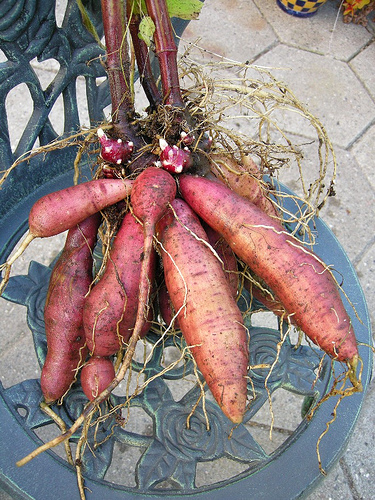
Yacon

Photo via Eattheweeds
Yacon is a root vegetable but not just any root vegetable. It has prebiotic properties meaning it helps intestinal flora as probiotics feed on prebiotics. Jerusalem artichokes are also prebiotics. Yacon is one of the highest vegetable sources of FOS (fructooligosaccharides), which help GI health (less bloating and less constipation), immunity and potentially mood. Yacon also boats a sweet taste but doesn’t raise blood sugar levels. I use yacon in smoothies using a powdered form from Navitas Naturals that has been increasingly hard to find.  There is also yacon syrup, which can be used in baking, and yacon slices which makes a nice snack.  Yacon, with interesting attributes, is definitely worth checking out. Yacon aced its audition.

So whether it’s foods or film, there’s nothing wrong with reliable standbys. Sally Field or Sally Field foods broccoli, cauliflower etc. aren’t going anywhere and are great options. However, whether for variety or for specific health benefits it’s fun to branch out, you just might not like what you find every time.
Do you like experimenting with new ingredients? Which ones are you enjoying lately? Would you say you like Sally Field or Elizabeth Olsen foods?


Wednesday, June 13, 2012

When it comes to sugar substitutes, what about stevia?

Blue, pink, yellow? d) None of the above

Yesterday, The New York Times ran a story entitled “Choosing a Sugar Substitute”. I found the article, like most sweeteners, unsatisfying. We’re told “for any of the sweeteners, one can as easily find a study that offers reassuring analysis of safety as one that enumerates potential alarming side effects.” When it comes to food and nutrition this “jury is still out” reasoning doesn’t work. As far as I’m concerned, the risky results have more clout. The article further tries to ameliorate potential risk by quoting a layperson and self-described “yellow girl” (yellow referring to Splenda affection) saying “hundreds of millions of people swallow food and drinks containing artificial sweeteners and so far, no widespread calamities of health have swept over them. “ I would love to know if yellow girl feels migraines, obesity and cancer are "widespread" enough. I don’t know if she equates danger with immediate death but we’re not talking about snake bites. With toxins, things can take time. Walter Willet expressed “if you smoke cigarettes, the lung cancer risk doesn’t go up for 30 years.”  Trans fats weren’t seen as problematic for 90 years. You can read my thoughts on artificial sweeteners here in “Better Safe Than Sweet

The best way to test a sweetener isn’t always research, where funding can introduce its own bias, but time. Sugar has been used long enough that we know the downside and concerns. Stevia has also been used for centuries in many cultures though only marketed (and approved) in the US recently. I was disappointed the Times article snubbed stevia. It is a plant you can grow in your garden. Detractors will say, “Just because it’s natural doesn’t mean it’s safe” and this is true but I’ll still take the garden over the lab as a starting point.  I love a brand called NuNaturals, which has no stevia-y aftertaste but also have this local honey and maple syrup in my home. Liquid stevia can seems rather pricy but a small bottle can last months, even a year because it’s much sweeter than sugar. Since it’s much sweeter than sugar, you use it sparingly.

Even the title of the Times piece rubbed me the wrong way. Sweeteners aren’t mandatory. Whether it’s honey or maple or stevia, I don’t believe our food should be doused with sweetness. Sweet begets sweet and the more you have the more you crave. The converse is also true and less sweetness leads to fewer cravings. One “sweetened” item a day is a good guideline. For me, that tends to be my smoothie or an afternoon cardamom cappuccino. So I'm not a blue, pink or yellow girl and truthfully I'm not that sweet.
What sweetener(s) do you use? How many sweetened foods would you estimate you have each day? Have you tried stevia? 

Wednesday, February 9, 2011

Artificial Sweeteners:Better Safe Than Sweet

                                                     Photo Amyvdh 

I received the following question regarding a Blisstree post I wrote:
I read your article about several foods that we commonly mistake for being healthy. I saw the image of the fat-free, sugar-free pudding and read the description. I understand that the food probably has little to no nutritional value but I was curious why you thought sugar substitutes are unhealthy? 

This is a very good question. When I was studying for my R.D. exam many moons ago I memorized a lot of information and random facts much of which I have since forgotten. One of the things I retained was the knowledge of eating disorder known as pica. Those with pica eat non-food substances such as dirt or soap; it’s quite serious. I’ve always likened eating fake foods such as sweeteners (saccharin, aspartame and sucralose), with “no nutritional value” to this disorder. If we don’t suffer from pica, what’s the appeal of food impersonators?

What was that? Oh you said the appeal is weight loss? Sorry to say that the increased use of sweeteners hasn’t made us thinner. Many sugar free foods are equal to or only slightly lower in calories than their regular counterparts. Furthermore, a study from the European Journal of Clinical Nutrition showed that artificial sweeteners do not “turn on” satiety signals the way sugar (protein or fat) does which can encourage those eating them to eat more. And a Purdue University study showed that artificial sweeteners might actually disrupt the body’s natural ability to gauge calories. In short, sweeteners do not satisfy us and may affect our ability to achieve satiety from other foods.

Artificial sweeteners have been linked with headaches (aspartame most often connected), GI distress, insomnia and heightened PMS (no thank you).  Plus, as Planet Green pointed out, as I stare at my recycling bin, there has to be a better use of the paper that goes into millions of these packets of this stuff.
The FDA says these sweeteners are safe but also finds genetically modified foods and artificial colorings safe.  I have read a bunch of studies, connecting sweeteners to leukemia and brain malignancies,  that don’t make them sound so safe. The truth is these sweeteners are questionable at best and only time will tell exactly.  No study has tested very long term effects or synergistic potential of multiple sweeteners over a lifetime. I, for one, would rather be skeptical than sick any time.  I wouldn’t give these substances to my children and therefore don’t eat them myself. I save my “chemical” ration for my hair color.
What is your sweetener, artificial or otherwise, of choice? Do you think something is safe if the FDA approves it? Have you ever had an adverse reaction to a sweetener you'd like to share?
Another post I wrote on sweeteners, the real ones.


Thursday, January 27, 2011

10 Allegedly Healthy Foods


( A far prettier version of this post appeared on Blisstree)

I’ll bet my nutrition credentials that broccoli will remain in the good--for-you food group for eternity. Similarly, SPAM and Velveeta will always be unhealthy. Still, many foods aren’t solidly at either end of the health spectrum. And lots of foods that people assume are healthy really aren’t. So, in the hopes of helping you to make smarter eating choices, here are ten foods you may think are healthy and nutritious, but the reality? Not so much           

Pretzels
Most pretzels boast no fat and so have a beloved place in many snack drawers. But aside from taste, exactly what do pretzels have to brag about? One ounce of pretzels contains 100 calories and 580 mg of sodium (and little else). Which is almost the same as eating 1 oz. of white hamburger bun: 77 calories and 149 mg sodium. For healthier alternatives, we suggest Happy Herbert’s Gluten Gone Pretzels or our favorite, Food Should Taste Good Chips.

Couscous
Couscous is cute, with its small bead-like shape. And my clients often put it on the “good carb” list with bulgur and other whole grains. I hate to break it to you, but couscous is pasta. The nutritionals are exactly the same. Bulgur and quinoa contain more nutrients.

Veggie Burgers
“Veggie” doesn’t automatically mean healthy. Many veggie burgers are made with TVP (processed soy), grains, and at times, scant amounts of actually vegetables. Scan ingredient labels for TVP and look at the sodium. (Our favorites are Sunshine Burgers.)

 Tuna Salad
And now for many people’s treasured tuna salad. Fish contains omega-3’s and we’re told we should consume more of those. However, these particularly omega-3’s have globs of mayo added to them. Four ounces of tuna salad contains 212 calories and 10 grams of fat – double the calories and five times the fat of sliced turkey. We suggest those delicious jarred tunas with chopped peppers, onion and celery, like the Zoe or Tonnino brands.

Brown Sugar
Brown sugar should be healthier than white sugar, right? Unfortunately, it’s not fiber that gives brown sugar its color; it’s molasses. When it comes to calories, brown and white are equals.

Canned Foods/Canned Fruit
My mother was a great cook, but we admittedly ate fruit cocktail growing up. I have two issues with canned fruit: one is the corn syrup pool the fruit swims in, and the other are the BPAs present in the can itself. Fresh fruits are always best, but dried (no sulfites) is my second choice. A medium peach has 8 grams of sugar; while one serving of canned peaches has more than 24 grams (or three times as much).

Olive Oil
Now it's time to address a food we all know, use, and love: olive oil. We’re actually fine with EVOO (thanks Rachel), but we’re not fine with using it like it’s “free”. It does contain calories, and if you use it to scramble eggs in the morning, in your salad dressing at lunch, and for dunking your bread before dinner (and more to cook your entrée), you’ve racked up almost 1,000 calories – not so healthy. It’s also not recommended to heat olive oil at high temperatures.

Biscotti
We love Italian names, but these are still just cookies. For you cookie monsters, we like healthier options including GlowCookies and Kookie Karma.


 UHT (Ultra-Pasteurized) Organic Milk
As we mentioned in an earlier post, organic is a good choice when it comes to dairy, but you need to look carefully at the labels. UHT (ultra pasteurized) milk is not as healthy as regularly pasteurized because the high heat process kills good bacteria and other nutrients. Companies like Organic Valley offer both options, and many including Natural By Nature, Milk Thistle, and our #1,  NY Milk always pasteurize at a lower temperature.

Sugar-Free Pudding or Sugar Free Anything.
Sugar-free Pudding (or sugar-free anything) with Splenda or NutraSweet can make brown sugar actually look healthy. We’ll take a little bit of real sugar over the faux version any day.
What were the surprises on this list for you? Any allegedly healthy foods we missed?


Thursday, November 4, 2010

The Sweetest Thing

November is National Diabetes Month. Perhaps you are not one of the 24 million people in the US with Diabetes. For this reason, maybe you don’t give diabetes much thought. What if I told you. at the rate we're at 1 in 3 children born in the U.S. may have diabetes in their future? I was at Good Morning America this morning talking sugar for Good Morning America Health(I will add the link to the segment when I get it). The truth is, diabetes aside, most of us eat too much sugar. On average we have 22 teaspoons (88grams) of sugar a day. For women, that’s over 3 times the maximum amount we should consume.

I mentioned in a Halloween post last week that candy isn’t where we get most of this sugar. If you add soda and juice drinks together they account for 40 percent of our sugar intake. If we were to add coffee and tea-based drinks the number would be even higher. If you want to reduce your sugar intake or your children’s sugar intake start with a beverage intervention. Soda, smoothies, yogurt drinks, chai teas and mochas are full of sugar. Most of these items contain your day’s worth of sugar. Instead try Hint water, Ayala Herbal Waters, Ito En Teas Tea and Boylan’s seltzers for sugar free, sweetener free drinks.

As for better sweeteners, there is agave nectar, honey and stevia. You’re probably seeing these in many more products. Agave has received attention as a lower glycemic sweetener; this means agave raises your blood sugar less than sugar or corn syrup. It has a great taste and is fairly sweet. You don’t need a lot of agave to sweeten teas, dressings or on French toast or pancakes. Agave isn’t calorie free and should be portioned out. Organicville is a great brand of ketchup and Wings of Nature are delicious snack bars, both use agave for sweetness. As for stevia, I see it as a natural alternative to equal and splenda. Stevia is available in packet form; you’ll see it as Truvia and Purevia . Zevia is a stevia sweetened soda that a lot of people like. It is a very good option for diabetics. The downside to stevia is that some find it has a licorice-like aftertaste, see what you think.

In term of sugar free products, I am always a little leery. Many sugar free cookies, candies and gums use sugar alcohols. Sugar alcohols end in –ol, you’ve probably seen sorbitol, maltitol or xylitol on ingredient lists. These sweeteners do raise your blood sugar, though not as much as sugar and can cause GI distress (aka gas or diarrhea) in quantities exceeding 10 grams. I tend to feel that sweet begets sweet and the more sweet we eat, “sugar free” or sweetened the more we will crave. My advice would be to stick to 1 sweet a day whether that’s a coffee drink or a sweetened yogurt and to choose more natural sweeteners whenever possible. If we could do that, add some fiber to our diets (oatmeal, fruits with skin) and sprinkle some blood sugar lowering cinnamon on our food…that would be the sweetest thing.
Where do you get sweet in your day? What sweetener to you use?

Monday, August 2, 2010

Moderation Schmoderation

A couple of weeks ago I was interviewed for an article about soda . I am not anti caffeine or completely anti sugar but I am not a soda fan and if you read this article that’s very clear. From my research, I am convinced soda is not something I should drink, nor do I keep it in the house or have my children drink it. One of my colleagues, a colleague I respect tremendously, read the article. She’s a diet soda drinker and proceeded to make a good case for her habit. She explained she had an “otherwise healthful and balanced diet” and that we all have our vices and said ‘if I were convinced from the research that it was really the devil I would find a way to cut it out.” I love a debate and here, in my face, was the case for moderation, the case for there being no bad foods, a case that is sensible, logical and completely not the way I think when it come to food and weight.

No List
For better or for worse, I believe there are foods or food products we shouldn’t eat. I don’t believe in artificial sweeteners blue, pink or yellow (though there is probably a hierarchy of nastiness). I also have a hard time with fake meats and many meat substitutes made with TVP. I think many vegetarians and vegans who rely on these products are replacing one dietary danger with another. I don’t eat wheat and feel there are many better, more wholesome grain choices even for those who do. And I’m not afraid to say most bread, at delis and sandwich shops, that people eat is junk. I am also frankly scared by factory farming. I don’t know how anyone can see Food Inc, read the work of Michael Pollan and others and not be. And finally there are products with multiple food colorings, high fructose corn syrup and preservatives, that means most supermarket products unless you sift through carefully, skip those too. Simply said, choose natural over chemical in all cases.

The Research
I see approximately 10 clients a day in at Foodtrainers. In these sessions I get a good sense of what they are eating and also the questions that arise as individuals try to change their diets. “Is sugar free Jell-O going to kill me” or “how bad is HFCS” are the types of questions that come up time and again. The truth is no research study, no matter how well designed, is going to prove that eating a food (no matter how chemical or fake) will lead to immediate death. It would be unethical to administer the amounts of these ingredients in a matter that would simulate 36,500 sodas (2 a day over 50 years), 87,600 packs of aspartame (4 a day over 60 years). In the meantime, I think we have to see the worrisome writing on the wall. Whether it’s cancer, kidney damage, diabetes blood sugar complications or any other lifelong ailment, if I see a few studies connecting a food to a disease, I’m going to take it seriously. If, in the process, I cut out a food coloring from my diet or my clients’ diets that ends up seeming safe, no harm done. Call it alarmist, extremist (wow I sound like a terrorist) whatever you will (and you will) but with food I say guilty until proven innocent though our government seems to disagree.

The Passion
I am not a vegan or vegetarian but admire them. While I have no plans to give up fish or eggs, I know the passion it requires to maintain a meat or animal free diet successfully. I also enjoy the manner in which vegans network, share ideas and inspire others to try new recipes or discover new ingredients. A post on one of my favorite sites, No Meat Athlete, caught my attention. Here, (he happened to be explaining the use of the term “no meat” versus pro vegetable) he said “safe has a shortcoming: by its very nature, it doesn't hold onto passionate people to help share it. I don't know many passionate almost-vegetarians.” I completely agree though I’d like to hold the flag for passionate almost-vegetarians. Though not everyone will jump on board and some will run away I think, when it comes to helping people navigate their food choices, you have to take sides. I too think safe has a shortcoming and frankly isn’t always safe. Web media expert published a list of 15 steps to social medial success. I especially liked “be daring. The most memorable stories tell the unexpected, speak directly to the heart or dare customers to live life to the fullest.”

The fun
And that’s just the thing, when you suggest that there are things we shouldn’t eat you’ll inevitably encounter someone saying, as another commenter did following my soda summary “You can always just drink water, if you want to remain totally safe and consume no calories. Gee, what fun” I call it the where’s the fun retort. The truth is, eating chemical-free, well produced food is fun and there’s a wonderful peace of mind that comes from putting good, real food in your body. And though this commenter thinks differently, there are lots of beverages to drink, even with the removal of the soda group. I love fruit smoothies and coconut water, Fizzy Lizzy drinks and all sorts of iced teas. As for food, believe it or not, I don’t suggest my clients hole up with organic broccoli and brown rice and call it a day. I love Farmers’ markets and fresh herbs, spices and once in a while a juicy (grass-fed) burger and yes, I’d like a glass of wine with that burger.
Do you think (and be honest) that all foods, even soda, have a place in our diets? Do you believe in moderation? I’d love to hear what you think.

Wednesday, April 28, 2010

Suddenly Sugar

Lately there has been a lot of “sweet” or maybe not so sweet news. There was a study from the Journal of the American Medical Association linking added sugar to heart disease, this week a correlation between chocolate and depression (which I found completely depressing) made headlines and now some interesting findings that agave is perhaps not the sweet savior many thought it to be.

While I read every study that comes my way, what I’m wondering is don't we know this? Since when was sugar ever healthy? I recall growing up (pre MS or RD) knowing that sugar causes cavities and that too much sugar makes you gain weight. Later, working in a hospital setting, we always discussed sugar with patients when we saw their triglycerides were elevated (one of the findings of the recent study). Despite, years of knowing sugar isn’t a health food people are consuming more and more sugar. And what’s worse is that sugar is not really on our radar. Perhaps it's a vestige of the 90s but many people monitor fat intake. Salt has received more attention lately but even before Bloomberg clients coming to my office had a sense that salt increases blood pressure and certainly females know salt increases bloat. Maybe fat and salt are easier to grasp.

We may be less sugar conscious because we associate sugar with diabetes or cavities and sadly these issues may be less scary or real. Yet sugar plays a role in arthritis and asthma, may intensify mood swings, PMS and depression and via insulin and inflammation can set the stage for cancer growth. This isn’t meant to alarm you (well maybe a little) but rather to shed light on sugar. American consume, on average, over 60 pounds of sugar annually. The JAMA study on heart disease and sugar gauged daily sugar intake at over 20 teaspoons of added sugars a day. I hope this sounds as appalling to you as it does to me.

So what are we to do? For starters, look at food labels and ingredient panels. On food labels you’ll see sugars listed in grams, there are about 4 grams to every teaspoon (12 grams of sugar would be 3 tsp). If you want a daily budget I would suggest 25 grams for women and 50 grams for men however I’m not a big fan of counting what we eat. On your ingredient lists, sugar can be sly. Some sugars end in “ose” such as dextrose, fructose and glucose. Others include the word syrup (corn, HFCS maple and rice) and then there is cane, honey and molasses. When you see any of these and sometimes you’ll see multiple sugar sources, that food has added sugar. Today, take inventory of your sweet foods. Coffee with sugar…check, yogurt with honey…check, sweet salad dressing- they add up quickly. See where you can cut down or cut out sweetness. If you can get down to 1 or 2 sweet items daily you’re doing pretty well.

With my clients, I have an exercise called a Savory Day where clients forego anything sweet 1 day a week. Try this and let me know how it goes, you may feel, as I do, that sweet begets sweet and the less you have the less you crave. I use dried fruit and minimal honey and maple syrup and have acclimated to unsweetened coffee though it took some time. Actually less sweetness led to less coffee too.
So how “sweet” are you? How many sweet items to do you consume? What sweeteners to you use?

Friday, April 9, 2010

Sweet Little Lies


Have you seen the commercials for high fructose corn syrup (HFCS) on TV lately? In case you haven't, I’ve provided the link. In the commercial, one mom questions another about a beverage with HFCS. The mother pouring the bright magenta beverage replies adamantly with a case for HFCS stating, among other things, that it’s “made from corn” and “fine in moderation.” Viewers are then encouraged to “get the facts.” There is debate over whether HFCS is the sole culprit in the obesity epidemic or whether it’s just one of many guilty parties. To me this is like debating murder versus manslaughter or brain cancer versus lung cancer, none of which are good. What’s next…commercials making a case for vodka, lard or perhaps infidelity (another hot topic)?


In the HFCS commercial you see one mom state that having HFCS was a sign of not caring what your kids eat (I concur though would never say that bluntly). This same mother doesn’t really know why HFCS is bad. I think we all suffer from the “I heard it is bad so it must be bad” syndrome at times. It is important to dig a little and research or ask an expert if you are questioning a certain food.
For HFCS I will tell you why it’s bad:

1. HFCS and I are roughly the same age. I say this to point out that HFCS hasn’t been around that long (it’s young!). In my lifetime, and as HFCS has made its way into more food products obesity rates have skyrocketed. HFCS is cheap and has a long shelf life. In that respect it is not that different from trans fats (also cheap and extend shelf life). I would argue that the cheaper the ingredients and longer their shelf life the more they will shorten your life.

2. HFCS may also affect your metabolism. This past Tuesday, Jane Brody wrote “high fructose intake over a period of months resulted in resistance to the leptin signal.” Leptin tells you’re satiated and can stop eating.

3. HFCS often contains mercury. In various studies as many as half the samples of HFCS were shown to contain mercury. Mercury can make its way in during processing. So much for HFCS being natural because it starts out as corn. Vodka can start out as potatoes. While many of us shun seafood, a stronger case can be made for shunning soda and certain snack foods and breads and cereals and all the other foods you may be eating with HFCS.

4. Michael Pollan has also pointed out that HFCS can be an environmental threat. The increase of corn for HFCS has drastically increased fertilizer use. The run-off from these crops is a serious threat to our rivers and oceans.

In all fairness, this isn’t just about HFCS. Increased rates of obesity are affected by the increase in screen time/decrease in activity, the increase in portion size and the increase of all “sweet” in our diets. There is just a logic breakdown if we say that because other factors may be culpable, HFCS is innocent. When it comes to HFCS, as Stevie Nicks says in little lies, “we’re probably better off apart.”

What do you make of the HFCS debate? Do you look for it on labels? Avoid it? Do you like Fleetwood Mac I would love to know.