Showing posts with label diets. Show all posts

Monday, September 15, 2014

Are you vegan, vegetarian, paleo? Shush….

I would rather have a mind opened by wonder than one closed by belief. ~ Gerry Spence

Last week I sat in a new doctor’s waiting room filling out paperwork. It was standard stuff past medical history, family history, medication information (none for me) etc. Then there was a section about exercise and eating. I described my exercise routine, vitamin regime and then stopped at a question you would think was up my alley. The question asked “are you a ” and then listed various dietary regimes such as vegetarian, vegan, kosher and a few others. I settled on something to the effect of balanced eater.

The truth is I don’t subscribe to any particular dietary camp. I’m allergic to wheat, seek out organic produce and wild fish, love certain things paleo (but also like legumes and dairy) and I enjoy perusing raw food blogs and juice daily.  I was reminded of the blogger previously known as The Blonde Vegan whose story received a lot of attention this summer.  For serious personal reasons, this blogger transitioned away from a strictly vegan diet and switched the name of her platform to the Balanced Blonde. She received criticism and threats in the process for not being strictly vegan. 
 Last month a study and corresponding article in the New York Times about low carb versus lowfat made the rounds and I cringed again. The term low carb seems as outdated as low fat. Shouldn’t the conversation be about which carbs are best to eat and the right fats? 

My friend and colleague Ashley Koff has a term “qualitarian” which resonates with me but all of this segregation reminds me a little of why I am a more spiritual person than a religious one. Both religion and nutrition should be about improvement and for me it’s individual with aspects from various faiths and dietary regimes resonating with me.  And let's be clear you can have someone who's a junky gluten free eater subsisting on potato starch-laden products or a vegan mainlining white, bready items.

Why do we need the labels? I can only think the descriptions make sense when someone else is preparing your food. I go to a restaurant and mention my allergy or "gluten free", I can imagine “vegan” makes things cut and dry as well. Although I am fine with eating fish, meat and dairy I understand the desire to exclude all animal products. The second we’re judging someone as not vegan enough or devout enough we’re focusing on exclusion and that to me isn’t healthy.
How do you describe your eating? Are you a ________? Why do you think these camps or terms have become so popular? 

Sunday, September 29, 2013

It’s OK to talk to your daughter (and son) about weight


Over the summer a blog post “How to Talk to Your Daughter About Her Body” made its rounds on Facebook. Many friends posted it, others reposted or commented, “this is great” or  “loved this”. I understand it was a very sweet message encouraging parents to have their daughters climb mountains, embrace teamwork and cook with 6 sticks of butter. But the advice for talking to your daughter about her body came down to this “don’t talk to your daughter about her body except to teach her how it works.”

Hmn, this is actually good advice for very young girls. When I speak in preschools and Kindergartens children embrace how their bodies’ function- what helps to heal boo boos and what’s good for the sniffles. Sadly, children (girls and boys) leave the cocoon of boo boos and rainbows and receive messaging about their bodies. At a certain point, saying nothing or as the author advises telling your daughter she looks “healthy” or “strong” isn’t going to cut it. And there’s more, I often hear from mothers who say, “she gained some weight but I don’t want to say anything”.  And you know what? The adolescent or teen tells me “my mother thinks I’m fat.” So much for silence.

Talk less, listen more
It’s difficult to give blanket advice regarding children and weight. I recall a meeting at my older son’s school. It was the summer before many children went off to sleep away camp. I was advised to “have the sex talk with your son before he hears it from his peers”. I bought the suggested books, psyched myself up and started reading with him. Two pages in he said “mom, is it ok if I play basketball now?” He wasn’t ready. Trust your instincts. I find a great way to glean information is to ask, “what are your friends saying about” (fill in the blank). This is a way to take a pulse. “Are any of the girls talking about clothes?” “Do boys comment about who is good at sports.” “Do you agree?” You don’t have to say much.
Car rides a great place for these conversations. There are no distractions, it doesn’t feel forced like the dinner table (a terrible place for weight-talk) and if your children are young and in the backseat, they aren’t looking at you. “Do kids say anything about who’s taller or shorter or heavier or thinner?” “Do your friends focus on healthy eating”? Starting with easy to answer questions paves the way for more touchy subjects. Sometimes, you don’t even need to “go there” your children will if they want to talk about something.

Use the D word
I am a fan of realistic advice when it comes to both nutrition and parenting. I know there are parents who don’t curse in front of their children or don’t let them watch the news. Perhaps these same parents nodded along when they read the bloggers (credentials?) advice to avoid the “D” word (that would be diet) and to tell your children that their thick thighs are good for running marathons.
In my NYC office, parents are so scared about “creating eating disorders” that they fail to have important conversations. Tell your children what a diet is, whether it’s a “nut free” diet they may be familiar with from allergic friends or the silly diet someone on a tabloid may have been rumored to try. Show them images before and after airbrushing so they know that most of us, even models and celebrities, have parts that aren’t perfect. And if you’re concerned with eating disorders, shift your concern to connecting with your child. How are they doing socially, academically? In my younger son’s fourth grade class they interviewed each other “what are you scared of?” was one of the questions. Knowing the answer to this is way more valuable than any nutrition facts panel or calorie concerns.

Make Family Style Adjustments
In many families children lie on opposite ends of the weight spectrum. One mom told me she had a “bipolar pantry” with items for her super skinny son on one shelf and others for her newly pudgy pubescent daughter. While we shared a laugh and I understood the mom’s intentions, we need unified family rules. Less sugar, more greens, slower eating and better hydration, to name a few, should be goals for everyone.

None of this is easy. We can dumb it down all we want but kids are smart. They live in the same world we do. As parents or teachers or mentors, let’s guide them with honesty and information rather than glossing it all over.
Have you talked to your children about weight? How have you approached topics of body image, weight and the media? Do you think it's a taboo subject?

Monday, February 27, 2012

Red Carpet Blues, Do You Feel Lied To?

I look amazing but do you know what it takes to look this thin in white?

“Watching these spectacles are a bit like eating a hot fudge sundae... delicious while eating it but you might feel a bit sick afterwards.”
Did you watch the Oscars last night and if so do you feel sick? The quote above is actually from Psychology Today and references a principle called the Social Comparison Theory. It turns out there is scientific backing for your “sickness”. The theory goes that in watching these award shows one can’t help but think about the glitz and glamour involved and feel a little inferior. It’s also the reason why many get a little thrill from the fashion flops, makes us feel a little better.
Love Billy but proof that women aren't the only one with hair/makeup/surgical? people
When I’m getting caught up, what makes me feel better (not that I don’t love a fashion blunder) is the effort involved. I asked my friends fab facialist Joanna Czech (clients include Kyra Sedgwick, Kate Winslet) and author and style expert Amy Tara Koch  about the red carpet process. They confirmed that it does in fact take a village, and months of preparation, to preen a celebrity. From their experience you have:

1-2. skin care goddess-esthetician or dermatologist
3. stylist for right dress, shoes and jewels
4. A-list hairdresser
5-6. nutritionist  or chef
7. trainer
8. manicurist
9. makeup artist
9, 10, 11, 12, 13, 15, 16, 17, 18. many of them with assistants
19, 20, 21 And of course PR and personal assistant(s) of the star
Twenty one people around while you get ready? 

This must-watch clip was for a print ad not red carpet but sums this process up well.
You watch someone go from plain to perfect via hair (and hair extensions), make-up and of course retouching. The clip takes about 30 seconds to watch and is slightly off-putting. While many of us relate to the person who sits down in the chair, she looks nothing like the person at the end. It’s reminiscent of when Oprah would bravely come on air sans makeup. As I watched the video this I can see how people feel there’s a little deception involved.

But is it lying? If people were food products and they were manipulated to appear completely differently than what I could purchase in the store I would think so. Photoshopping may be more extreme than primping. The American Medical Association adopted a policy on body image and advertising urging advertisers and others to “discourage the altering of photographs in a manner that could promote unrealistic expectations of appropriate body image.”

And it’s not just photoshopping. Remember the Victoria’s Secret model discussing her pre-show food plan. I shouldn’t call it a food plan because it’s comprised of over a week of protein shakes and twice daily workouts. Eventually she’s pulls the shakes to “dry out” before the show. I don’t know how common or uncommon this is. I know she was honest or foolish enough to mention it. She did caution young girls to “not try this at home”; I can guarantee you many did just the opposite.

Watching red-carpet events, fashion shows or reading magazines has different effects on people. Joanna summed it up well saying “I believe some people feel insecure and some inspired”.
Do you think there’s a degree of deception in all that’s involved to be red-carpet ready? Did you watch last night? Do you feel sick today? Any flops you want to mention?

Wednesday, June 15, 2011

Have you lost your freshman 15?


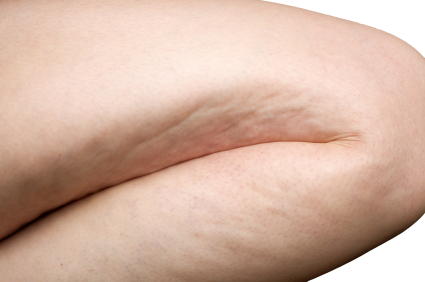
Thigh (not mine) post freshman year
Exciting news, we have a new Foodtrainer. Her name is Carolyn Brown. She’s a Tulane grad and has taught nutrition at the NYC Greenmarkets, she’s a blogger and a dodge ball player, smart and snarky. She’s running our 4-week “Summer School Course” for students and grads of all ages. I asked Carolyn to blog about that clichéd Freshman 15 and whether we tend to lose it or keep it as a collegiate souvenir. I’ll let her take it from here:

I’ve never liked talking about the freshman 15 – maybe because for me, it was more like 20. I’m seriously grateful it was in the pre-Facebook era. But as a freshman 15 alum I know that the freedom college offers (not unlike loosey goosey summer eating Lauren wrote about) may be great for your social life but the lack of structure can lead to a lasting “hangover” as in hanging over your pants. It isn’t always immediate; it can show up a little later as the sophomore surplus, the junior jiggle, or even the post-college pudge.  

All joking aside, the problem isn’t so much the weight gained (assuming you’re still around a healthy weight). Research shows that women tend to lose most of it with time. The real issues are why it was gained in the first place and the eating patterns that may be repeated for years to come.

Some reasons for the freshman weight gain aren’t surprising buffet style dining halls replace mom’s well-balanced meals, high school sports no longer provide built in activity and then there’s the drinking. And when you drink more, you eat more – and make less intelligent choices. Would you really need the cheese fries, onion rings and mozzarella stick trio sober? It’s not all a lack of self-control though, so give yourself  (or maybe your college-aged children) a break. In your late teens growth slows down—and so does ones metabolism. Add in inconsistent sleep and associated hormonal changes that affect hunger and fullness. And alcohol it’s is a depressant and in this way influences eating.

For many, college is the first time they gain a noticeable amount of weight and it’s also their first foray into dietland.  College girls resort to dangerous methods to lose weight. It’s now a far cry from Weight Watchers. Extra popular before Cabo-bound spring breaks are starving, binging/purging, obsessive exercise and the use of “appetite suppressants”: cigarettes, Adderall, laxatives and diet pills. Eek.

But there are healthy ways to lose that stubborn freshman 15 even if it’s stuck around long enough to make it to a few reunions. Exercise is crucial. Yawn, I know, but there are actually ways to make it less of a chore. Lazy friends rub off, so try seeking out active friends who will drag you to a spin or dance class. Peer pressure can be positive and works at all ages. Another great way to get moving is to join your city’s “social sports” leagues. Teams are based on skill level and age (and are usually co-ed, wink wink).You don’t want your exercise merely burning off the booze, your total drinks for the week needs to be a single digit and I suggest at least 3 “dry” days. Treats (pizza we’re talking to you) should be no more than once or twice a week.

My freshman 20 came off slowly. Leaving the dorms for a house with a kitchen helped. Also I took Intro to Nutrition class learned low calorie doesn’t necessarily mean healthy and completely changed my relationship with food. This led me to a Foodtrainers-bound career path sans post-college pudge.
Are you a freshman 15 alum? When did you lose the weight? Was college the first time you dieted? Any scary weight loss regimes to share? Do you feel friends affect your eating or exercise?